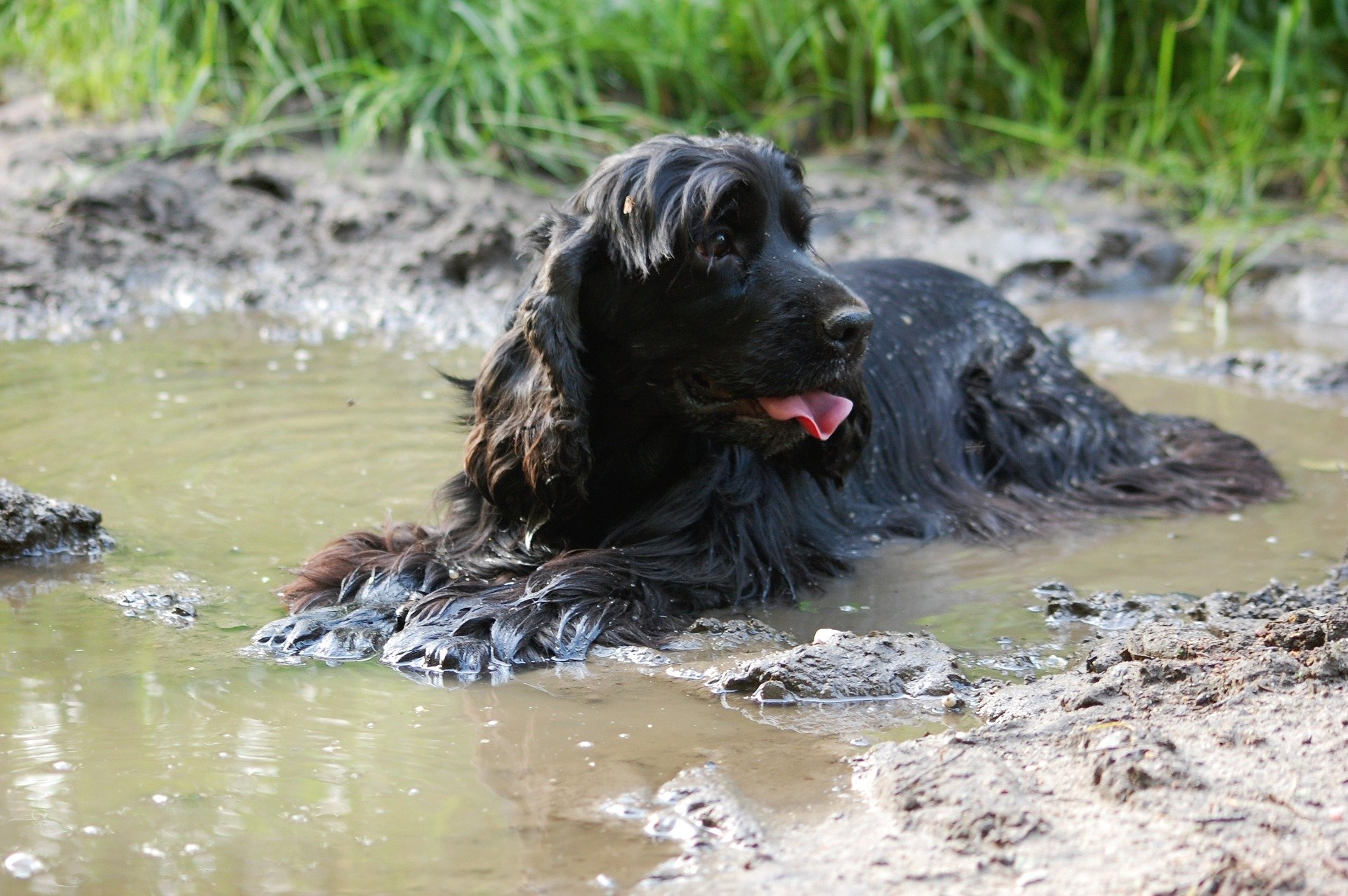
Baths!
Perhaps the easiest way to begin your quest for a shinier coat is to give your dog a bath. However, it’s important to research the breed’s requirements before jumping into the tub. Bathing a dog too often may have the opposite of the intended effect — their natural oils are important to coat health. If the majority of your dog’s time is spent indoors, once or twice a month should suffice (unless they’re a big fan of a good old roll in the mud).
It’s also important that you only use shampoos formulated for dogs. Different breeds of dogs may require the use of different types of shampoo, and some may also benefit from conditioner too. For dogs with allergies that cause itchy skin, oatmeal shampoos are a great way to soothe irritated skin and help a dog’s coat glow.
Regular grooming.
Every dog benefits from a consistent grooming schedule. Removing dead skin cells, loose hair, dirt, and debris like burrs helps the coat’s natural oils do their work. Plus, it also gives you a chance to inspect your dog’s body from head to tail. When you get to know your dog’s normal state of being, it can help you uncover any aberrations in their health earlier than you might otherwise.
When it comes to brushing, your pet care schedule will differ depending on the type of coat. Longhaired, curly-haired, or especially silky dogs require daily brushing. This prevents tangles and mats from forming. While dogs with shorter coats might not require daily brushing, regular brushing will remove loose hair and dirt, helping you cut down on housework.
A high-quality diet.
A strong, healthy coat’s foundation is built upon nutrition. Just like you do for your own food, you should consider the ingredients and nutritional profile of the food you choose for your dog. There is a wide variety of options out there, both homemade and commercial.
While premium dog foods may be expensive, they don’t just affect your dog’s coat health. Choosing to provide your dog with a high-quality diet has additional full-body benefits like supporting a healthy digestive system, efficiently delivering essential nutrients, and maintaining proper weight. Making a small investment in your pet’s diet can make a real difference over the course of their life, keeping them healthier from the inside out.
Proactive parasite prevention.
Treating your dog for parasites like fleas, ticks, and worms is a vital component of any dog care regimen. Aside from carrying and transmitting dangerous communicable diseases, these pests can have a negative effect on your dog’s coat. Worms can cause excessive shedding, a dull and dry appearance, and even rashes, and a flea infestation can lead to irritated, flaky skin due to all the itching.
Flea and tick and heartworm medications have come a long way from the greasy external treatments of decades past. Most veterinarians offer chewable options for both, making meds easy for you and tasty for your dog. Be sure to follow a regular treatment schedule — if you’re prone to forgetting things, mark it on your calendar.
Supplement with omega-3 fatty acids.
These “healthy” fats play a critical part in your dog’s coat health. It’s especially important to make sure your dog gets the omega-3s they need if you feed commercial dog food, a low-fat diet, or homemade meals. These diets often do not contain enough omega-3s, which can have a detrimental effect on the appearance of your dog’s coat.
Omega-3 fish oil for dogs is an easy, non-toxic way to provide your dog with additional natural oils that they need for a shiny coat. Your vet can give you more advice on the dose that is appropriate for your dog. Buy a third-party tested, high-quality fish oil to ensure your dog’s getting the maximum benefits of omega-3 fish oil for dogs.
Talk to your vet.
Before using any at-home method, check with your vet. They will likely want to rule out any more serious conditions that can affect the shine on your pup’s pelt. If you get the go-ahead from your vet, discuss the options that you’re interested in.
While bathing and brushing aren’t necessarily methods you need to clear with your vet beforehand, you should talk to them before changing or supplementing your dog’s diet. Your vet can provide you with additional guidance on how to add a new food or supplement safely and with minimal side effects.